Carrageenan Factory Bottlenecks: Filtration, Evaporation and Drying
Carrageenan lines rarely lose time in only one place. A filter starts climbing in pressure. Evaporator duty stretches. Dryer behavior turns uneven. Final powder specification needs more correction than planned.
The visible bottleneck may sit downstream, but the cause often starts upstream in extraction: how the seaweed is opened, how viscosity develops, how fine solids behave, and how soluble fractions move through the plant.
For extraction managers, the practical question is not simply “can we extract more?” It is “can we extract in a way that keeps the rest of the factory moving?”
Thalrix supports seaweed processors with enzyme solutions designed for controllable hydrolysis, improved solids handling, reduced viscosity pressure, and more consistent ingredient specifications. As an enzyme supplier for seaweed processing, our focus is plant performance — not lab theory.
Why downstream bottlenecks begin upstream
Carrageenan production depends on a chain of linked operations. When extraction creates a liquor that is too viscous, too variable, or too loaded with difficult fines, every downstream step absorbs the penalty.
Common symptoms include:
- Rising pressure across filtration equipment
- Shorter filter runs and more frequent cleaning interruptions
- Slow liquor clarification
- Evaporators operating with higher load and less flexibility
- Dryer feed that behaves inconsistently from batch to batch
- Powder moisture variation and specification drift
- Increased recycle, rework, or blend correction
These issues are often treated locally: change filter media, adjust feed rate, tune evaporator settings, or slow the dryer. Those actions can help, but they may not address the liquor properties entering the section.
A better approach is to manage the extraction profile so the liquor is easier to separate, concentrate, and dry.
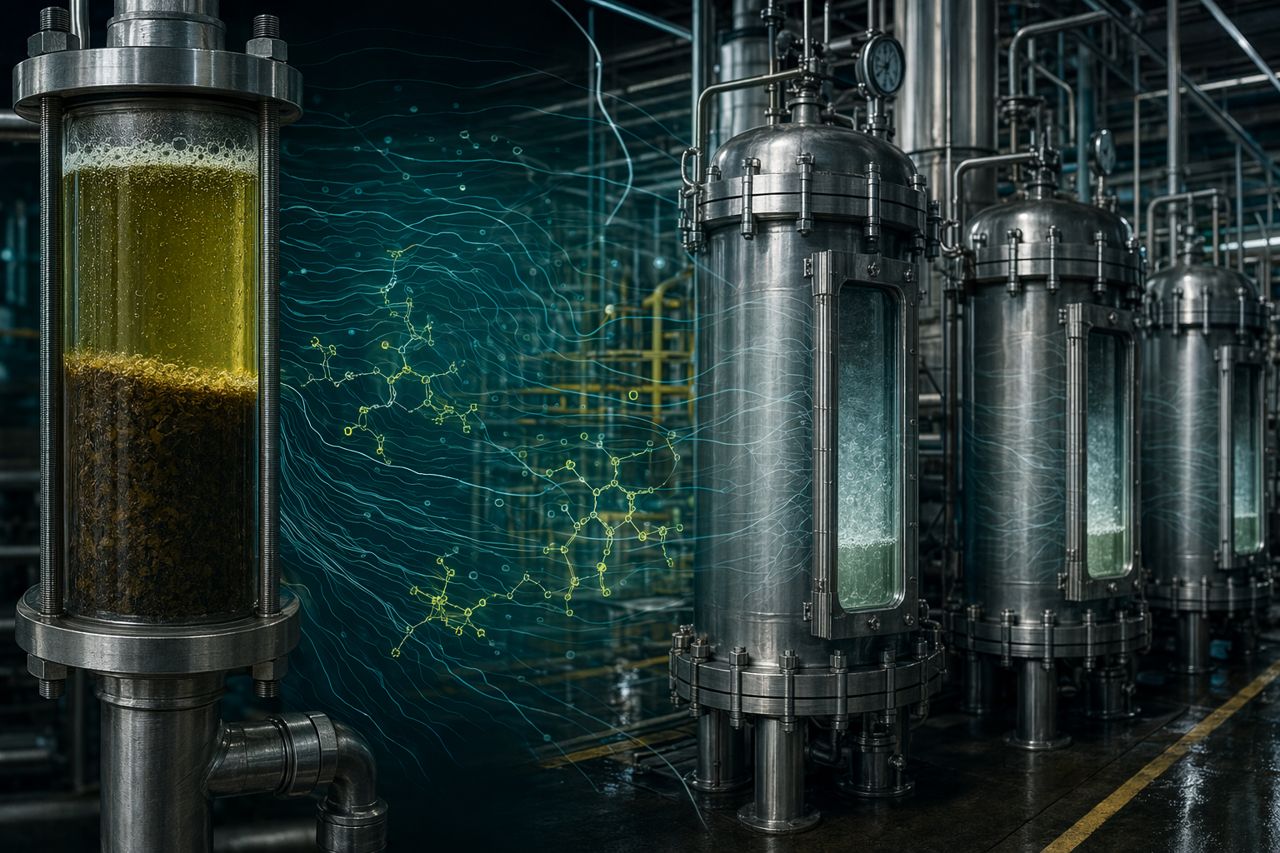
Filtration: where viscosity and fine solids expose the problem
Filtration is usually the first downstream stage to reveal that extraction is becoming difficult to control.
When seaweed tissue is opened aggressively or unevenly, the process can release a mix of soluble carrageenan, suspended fragments, colloidal material, and fine particles that resist clean separation. If the liquor is also highly viscous, drainage slows and pressure rises faster.
What operators see at the filter
Typical plant-floor indicators include:
- Filter pressure building earlier in the run
- Lower filtrate flow at the same operating condition
- Thicker cake with poor drainage
- Increased carryover of fine material
- Longer cleaning cycles
- Variable clarity between batches
The filtration issue may not be a filter issue at all. It may be an extraction-control issue.
How controlled enzymatic treatment can help
A targeted enzyme program can support cleaner separation by modifying selected non-carrageenan structures and seaweed cell-wall components before they become a downstream burden.
The operational objective is not uncontrolled breakdown. It is controlled hydrolysis that helps:
- Open seaweed structure more predictably
- Reduce problematic viscosity contribution
- Improve release of desired soluble fractions
- Lower fine-solid resistance during separation
- Support more stable filtrate quality
For a carrageenan factory, the value is measured in longer filtration stability, fewer pressure surprises, and liquor that behaves more consistently through the next unit operations.
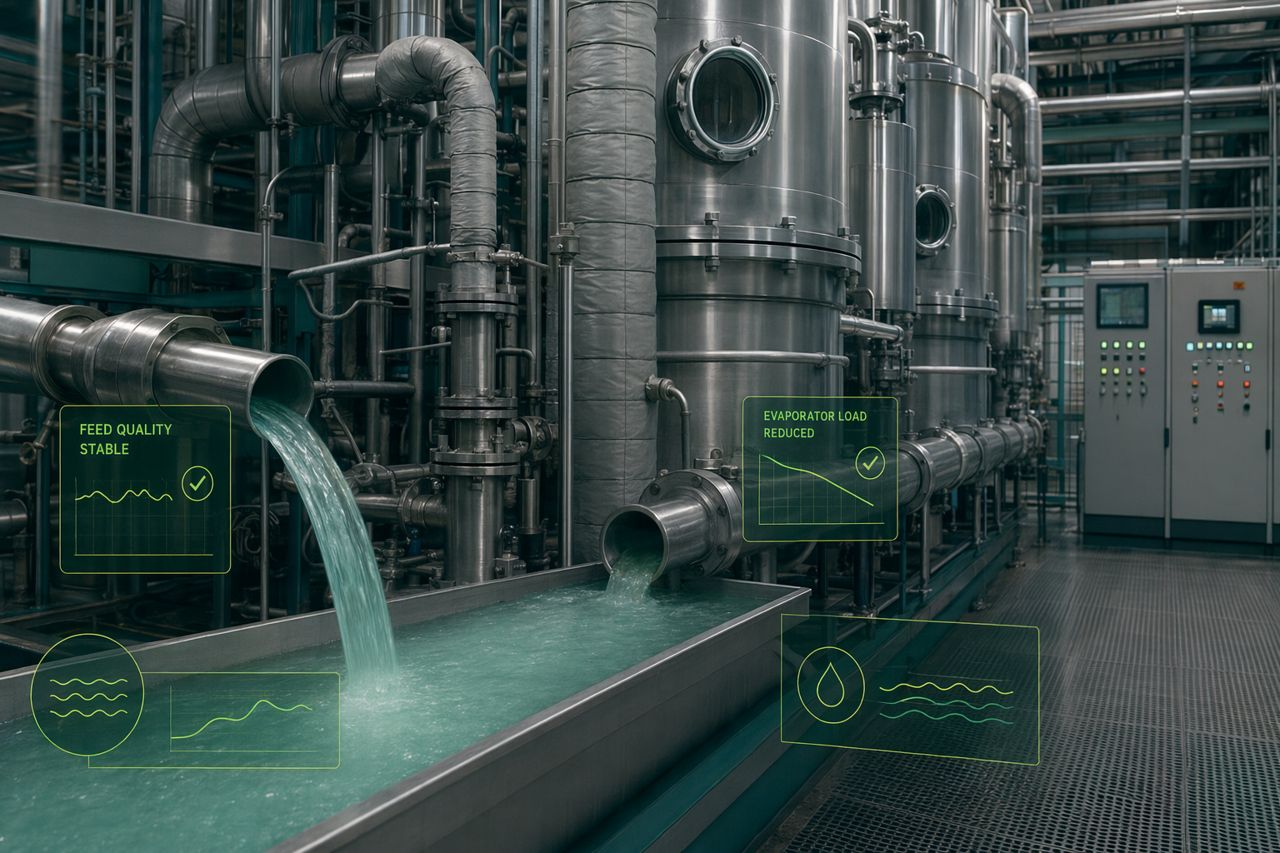
Evaporation: concentration is easier when liquor behavior is predictable
Evaporators are designed to remove water efficiently. They are not designed to compensate for every upstream variation in liquor viscosity, suspended load, or dissolved-solids behavior.
When extraction liquor varies, evaporator performance can become less predictable. Operators may need to slow feed, adjust conditions, or accept longer concentration time to protect product quality and avoid fouling risk.
Upstream factors that affect evaporator load
Several extraction-side factors influence evaporation:
- Liquor viscosity entering concentration
- Insoluble carryover after filtration
- Batch-to-batch solids variation
- Gel-forming tendency under concentration
- Mineral and non-target soluble load
- Stability of the feed stream through heating surfaces
Even when the evaporator has enough installed capacity, inconsistent feed properties can reduce practical throughput.
Why viscosity control matters
High or unstable viscosity affects heat transfer, circulation, pumping behavior, and residence-time consistency. It can also make the operator more conservative, especially when downstream drying depends on a narrow feed window.
A controlled enzyme step can help create a more manageable extraction liquor before concentration. The goal is not to dilute the problem or push it downstream. The goal is to send a cleaner, more predictable feed into evaporation.
Potential benefits include:
- More stable evaporator feed behavior
- Reduced process interruptions from variable liquor handling
- Better concentration consistency
- Less downstream correction before drying
- Improved confidence when running higher plant throughput
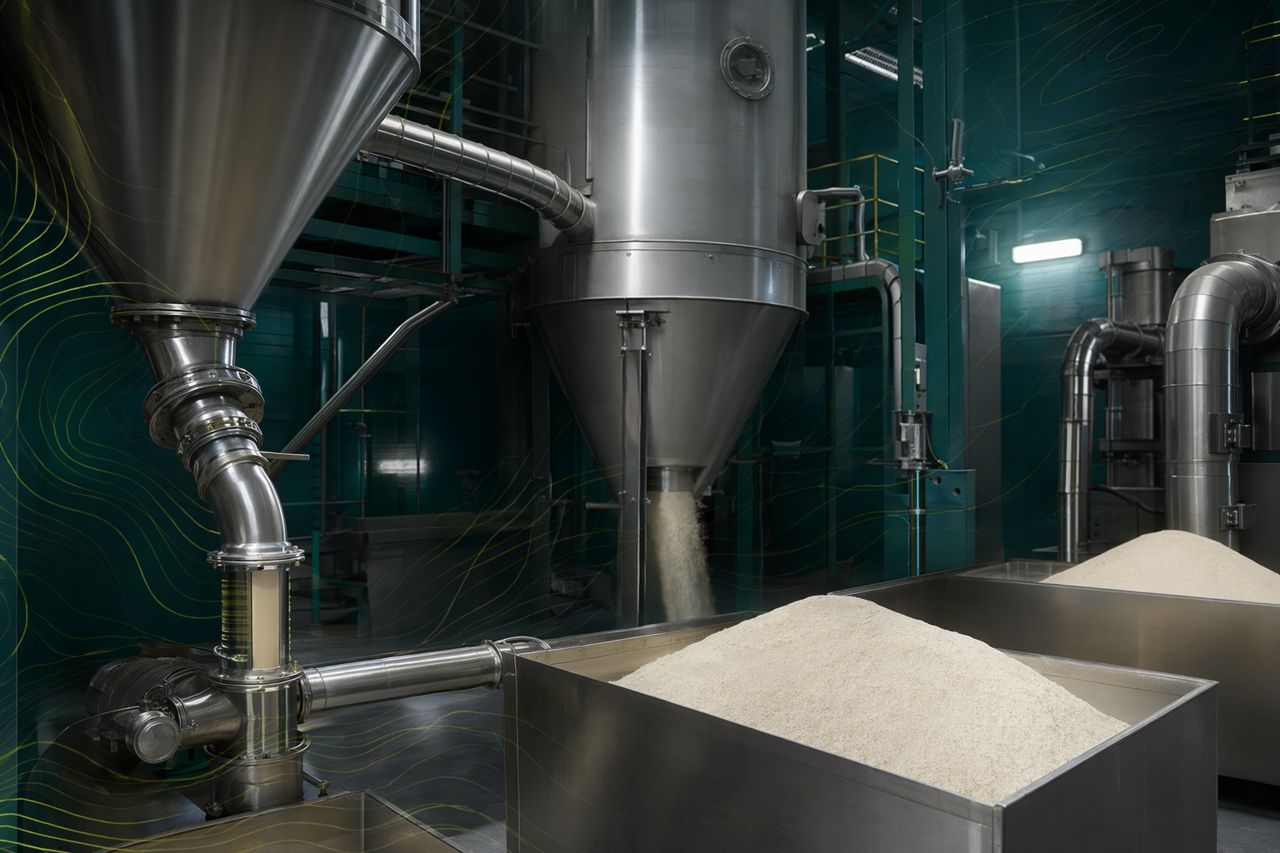
Drying: powder consistency starts before the dryer
Drying is often judged at the powder outlet, but many dryer issues are inherited from extraction and concentration.
If concentrated carrageenan feed arrives with variable viscosity, solids behavior, or moisture load, the dryer must absorb that variation. The result can be inconsistent powder characteristics, uneven drying response, and tighter operating margins.
Dryer problems linked to upstream variability
Processors may see:
- Feed handling variation before atomization or drying
- Inconsistent drying behavior between batches
- Powder moisture drift
- Clumping or flowability concerns
- More frequent parameter adjustments
- Higher risk of off-spec material
When the feed stream becomes more predictable, the dryer has a better chance of staying inside the intended operating window.
Protecting ingredient specification
Carrageenan buyers expect repeatable functional performance. That puts pressure on the factory to control not only yield, but also product consistency.
An upstream enzyme strategy can support specification control by helping reduce variation in the material entering the dryer. For commercial production, that can mean fewer surprises, cleaner batch release, and more reliable customer supply.
The extraction manager’s control points
For carrageenan processors evaluating an enzyme-assisted approach, the important control points are practical and measurable at plant level.
1. Raw seaweed variability
Seaweed quality shifts by species, season, origin, storage condition, and preparation. An enzyme program should be selected with that variability in mind, not as a one-condition recipe.
The goal is a robust process window that helps normalize extraction behavior without overprocessing the material.
2. Hydrolysis control
The enzyme step must be targeted. Too little effect may not relieve filtration or viscosity pressure. Too much effect can create unwanted process or specification risk.
Thalrix develops recommendations around controlled hydrolysis — enough to improve processing, without losing sight of final carrageenan performance requirements.
3. Solids handling
Better extraction is not just about solubilization. It is also about how residual solids separate, drain, compact, and leave the process.
A successful program should help the plant manage both the liquid stream and the spent biomass stream.
4. Downstream compatibility
An upstream process aid only creates value if downstream equipment responds well. Evaluation should include filtration, evaporation, drying, and final powder quality — not extraction yield alone.
5. Repeatability
A one-time improvement is not enough. Carrageenan factories need a process that can run across operating shifts, seaweed lots, and production campaigns.
That is where supplier support matters: application fit, practical dosing guidance, and troubleshooting based on plant realities.
What to evaluate in a plant trial
A good carrageenan enzyme trial should connect upstream treatment to downstream plant outcomes. The strongest trials compare the same line performance before and after the enzyme program under controlled operating assumptions.
Useful evaluation points include:
- Extraction liquor viscosity trend
- Filtration pressure development
- Filtrate clarity and solids carryover
- Filter cycle stability
- Evaporator feed behavior
- Concentration consistency
- Dryer feed handling
- Powder moisture consistency
- Final ingredient specification alignment
- Cleaning frequency and process interruptions
The aim is to prove whether the enzyme program creates a more controllable factory flow.
Commercial value: bottleneck relief without a major equipment change
Many carrageenan plants face a familiar constraint: market demand is there, but installed equipment is already under pressure. Adding hardware may be expensive, slow, or difficult to justify.
An enzyme-assisted extraction strategy can be a practical route to debottlenecking when the limiting factor is liquor behavior rather than nameplate capacity.
Potential commercial gains include:
- Higher effective throughput through existing assets
- Fewer filtration disruptions
- More stable evaporation and drying campaigns
- Reduced off-spec risk
- Better utilization of raw seaweed
- More consistent customer supply
- Improved production planning confidence
The strongest value appears when the enzyme program is matched to the factory’s actual bottleneck — not sold as a generic additive.
Where Thalrix fits
Thalrix works with seaweed processors that need enzyme solutions built around real industrial constraints: thick liquors, variable raw material, hot extraction areas, solids separation, and specification pressure.
For carrageenan factories, we focus on:
- Targeted substrate breakdown where it supports process flow
- Controllable viscosity reduction
- Cleaner solid-liquid separation
- Better downstream handling through evaporation and drying
- Practical implementation in existing plant layouts
- Consistent ingredient specification support
We speak in plant outcomes because that is where the decision is made.
Request a quote for your carrageenan line
If filtration pressure, evaporator load, or dryer inconsistency is limiting your carrageenan production, Thalrix can help assess whether an enzyme program fits your process.
Use the on-site request a quote form to share your seaweed type, process stage, bottleneck, and production objective. We will respond with a practical recommendation for your line.