Bulk Enzyme for Seaweed Extract Yield
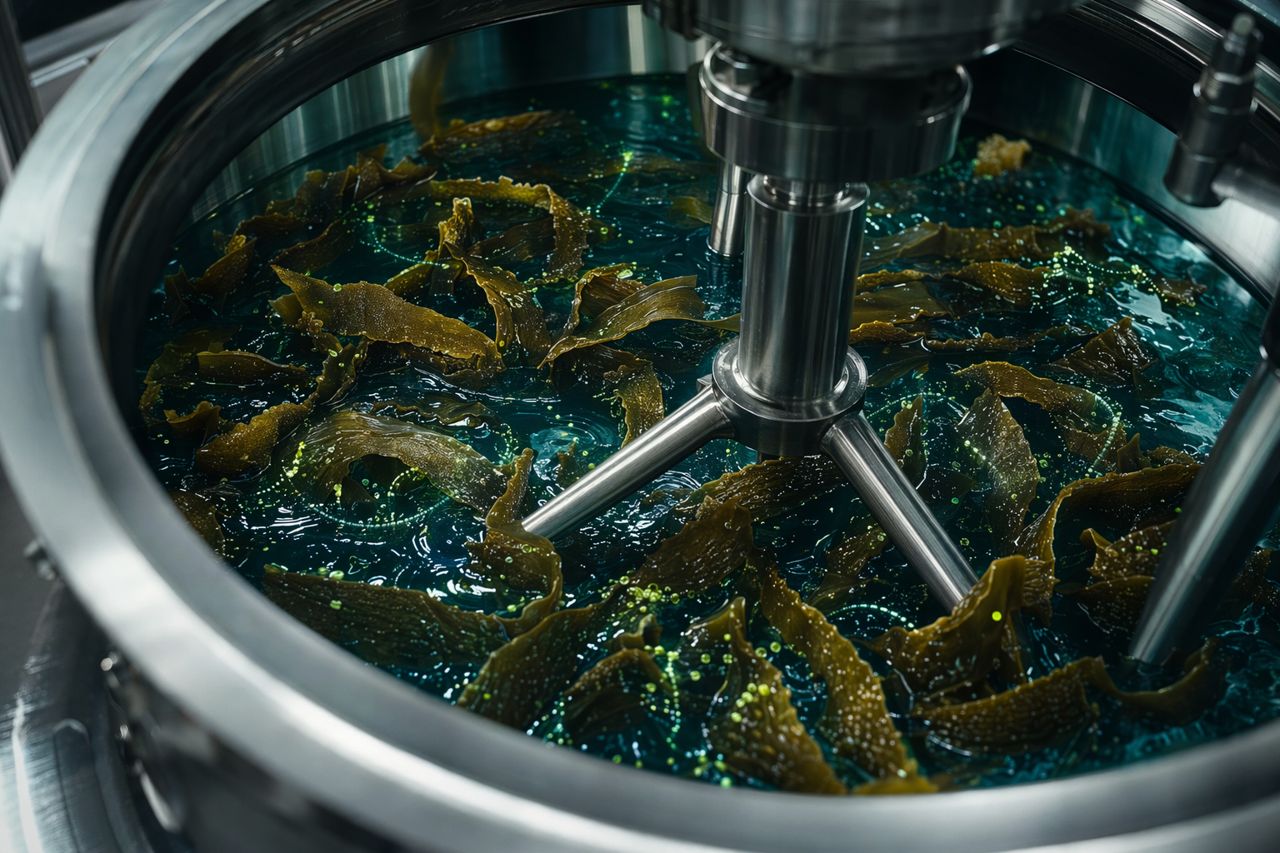
For a seaweed processing plant, extraction performance is won or lost inside wet biomass: how fast the cell wall opens, how controllable the liquor becomes, how cleanly solids separate, and how consistently the finished extract meets specification.
Thalrix supplies bulk enzyme solutions for seaweed extract production, with cellulase and xylanase programs designed to support structural carbohydrate breakdown and liquor release, plus selected protease options for streams where proteinaceous material affects handling, clarification, or downstream consistency.
If you need an enzyme supplier for seaweed processing that understands plant-floor constraints, Thalrix focuses on practical outcomes: more manageable viscosity, improved solids handling, cleaner separation, and repeatable production behavior across variable marine biomass.
Enzyme support for seaweed extraction plants
Seaweed is not a uniform raw material. Species, harvest location, season, moisture, ash load, fiber structure, and pre-processing all change how the biomass behaves in extraction.
A Thalrix enzyme program can be built around your real operating conditions, including:
- Brown, green, or red seaweed streams
- Fresh, chilled, dried, or milled biomass
- Hot-water or controlled-temperature extraction
- Agitated tanks, hydrolysis vessels, screens, decanters, centrifuges, and filtration steps
- Extracts intended for agriculture, food ingredient, fermentation, feed, technical, or industrial use
The goal is not enzyme addition for its own sake. The goal is to make the extraction line easier to run and the output easier to standardize.
How cellulase and xylanase help open seaweed structure
Many seaweed extraction challenges start with cell-wall architecture. When structural polysaccharide networks remain closed or only partially opened, liquor release can be limited and the plant may see high residual solids, slow drainage, and variable extraction yield.
Thalrix cellulase and xylanase solutions are selected to support controlled hydrolysis of cell-wall components that restrict liquor movement. In practical plant terms, this can help:
- Improve release of soluble fractions from chopped or milled biomass
- Reduce trapped liquor in spent solids
- Support more even hydrolysis across the extraction vessel
- Improve pumpability where biomass thickening is a constraint
- Create a more predictable feed to screens, presses, decanters, or centrifuges
For extraction managers, the value is control. The right enzyme system should help open the biomass without pushing the process into uncontrolled thinning, over-processing, or downstream instability.
Protease options for selected seaweed streams
Not every seaweed stream needs protease. But in selected processes, proteinaceous material can contribute to fouling, unstable separation, haze, poor flow, or inconsistent extract behavior.
Thalrix can evaluate protease options where protein management may support:
- Cleaner liquor movement through clarification equipment
- Reduced interference during solids-liquid separation
- Improved flow through screens or centrifuge feed zones
- Better consistency in finished extract appearance or handling
- Reduced variability between raw-material lots
Protease selection depends on the seaweed species, extraction target, pH range, temperature profile, and downstream specification. Thalrix keeps this selection commercially practical: the enzyme must fit the line, not the other way around.
Built for viscosity control, not just yield claims
In seaweed extraction, more release is useful only if the plant can still move, separate, and finish the liquor efficiently. Poorly controlled hydrolysis can create viscosity problems, clarification bottlenecks, or a liquor profile that is difficult to standardize.
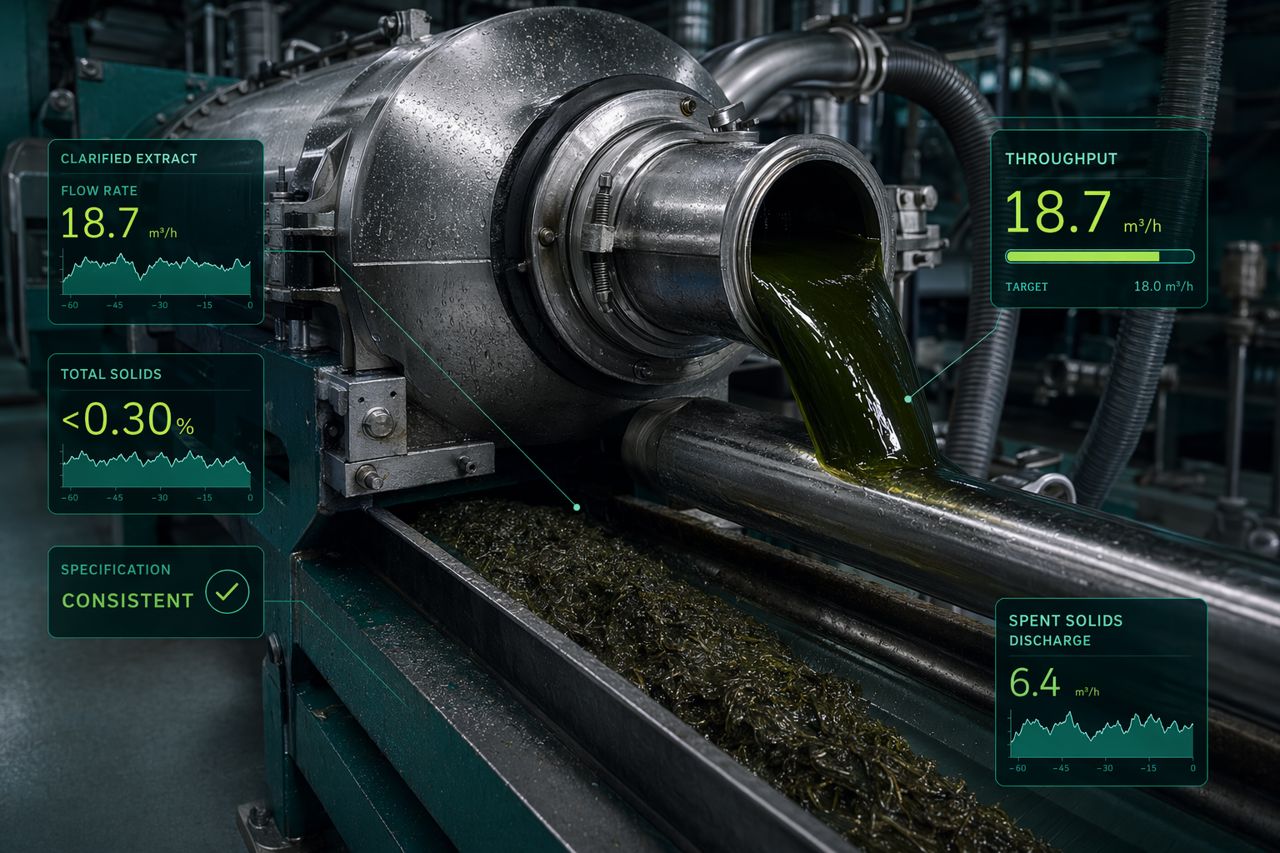
Thalrix approaches enzyme supply around measurable production behavior:
- Throughput across extraction and clarification steps
- Viscosity behavior during and after hydrolysis
- Solids discharge quality
- Liquor clarity and separation response
- Batch-to-batch extract consistency
- Compatibility with existing temperature and pH windows
- Fit with tank residence time and available agitation
This makes the enzyme program easier to justify to operations, quality, and procurement teams.
Where Thalrix bulk enzymes fit in the process
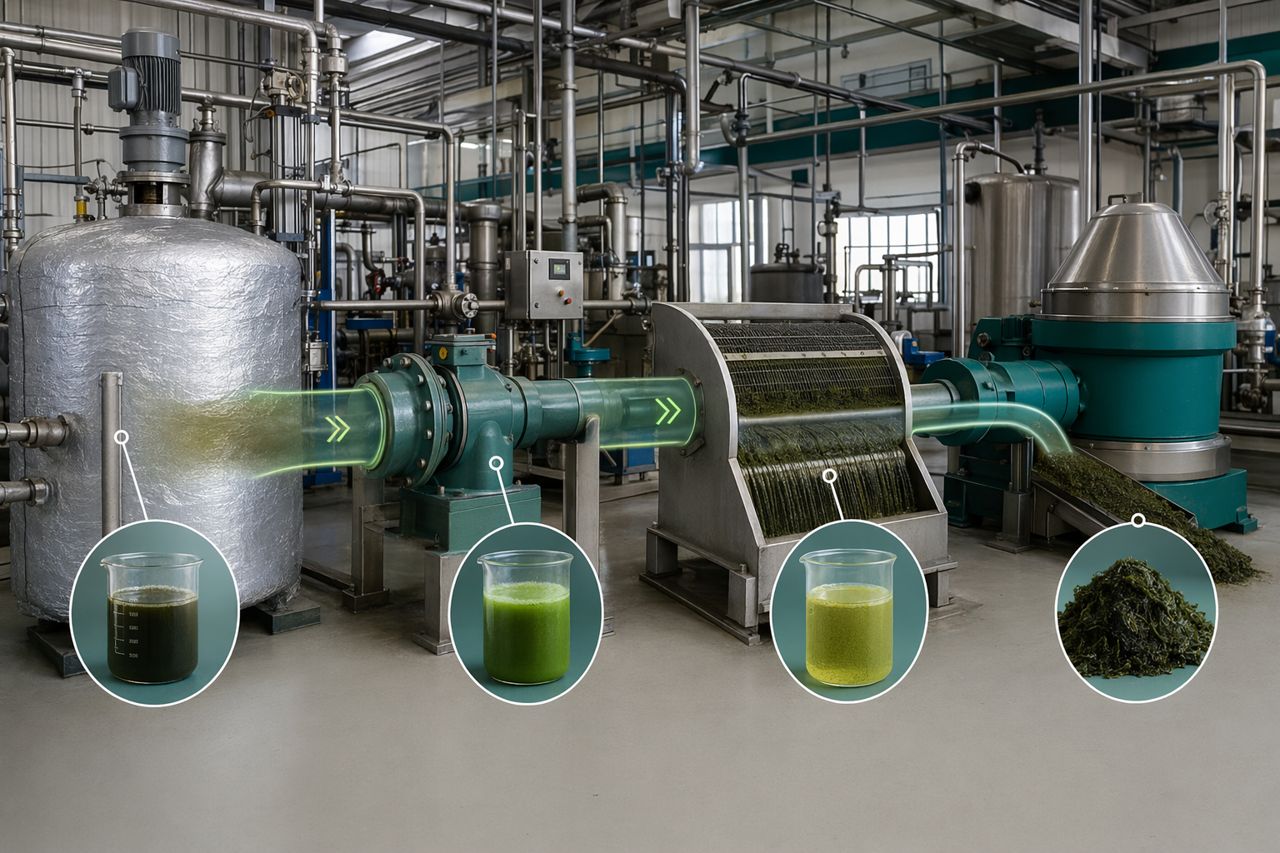
A typical seaweed extract line may use enzyme treatment after size reduction and hydration, during controlled extraction, or ahead of primary separation. Exact placement depends on equipment layout and product targets.
Common integration points include:
- After milling or chopping to improve contact between enzyme and biomass structure.
- During extraction hold to support controlled cell-wall opening and liquor release.
- Before screening or decanting where viscosity and solids behavior influence separation efficiency.
- Ahead of polishing steps where a cleaner feed can support better downstream consistency.
Thalrix works with your team to identify where enzyme addition creates the strongest operational value without adding unnecessary process complexity.
Commercial reasons to specify a bulk enzyme partner
Seaweed processors need more than a catalog enzyme. They need a supply partner who can help align formulation, batch size, documentation, and delivery with production realities.
Thalrix supports bulk buyers with:
- Enzyme selection for targeted extraction outcomes
- Bulk supply planning for recurring production
- Practical formulation guidance for plant trials
- Lot-to-lot consistency expectations
- Documentation support for quality and procurement review
- Clear communication with technical, operations, and purchasing teams
Whether you are improving an established extraction line or scaling a new seaweed ingredient, Thalrix can help define an enzyme program that fits your equipment and commercial specification.
What to share for a practical quote
To help Thalrix recommend the right bulk enzyme approach, include as much of the following as available:
- Seaweed species or blend
- Raw material form: fresh, dried, milled, chopped, or slurry
- Extraction temperature range and pH range
- Approximate hold time and agitation style
- Current bottleneck: yield, viscosity, solids handling, clarity, filtration, or specification drift
- Separation equipment used after extraction
- Target extract format and quality requirements
- Estimated monthly or batch-volume demand
With this information, Thalrix can respond with a practical supply recommendation instead of a generic enzyme suggestion.
Request a quote
If your plant is working to improve seaweed extract yield, control hydrolysis, reduce viscosity issues, or produce more consistent ingredient specifications, contact Thalrix for a bulk enzyme quote.
Use the on-site request form and tell us about your seaweed stream, extraction conditions, and production target. A Thalrix specialist will review the application and respond with a commercially practical enzyme supply path.