Enzyme for Carrageenan Plant Yield
Carrageenan plants live or lose margin in the steps between raw seaweed intake and finished powder: hydration, alkali treatment, extraction, clarification, gel handling, pressing, drying, and milling. Thalrix supports processors with enzyme-assisted pretreatment programs designed to improve how seaweed structure opens before core extraction—without asking the plant to surrender control of its established alkali, filtration, or drying logic.
If you are evaluating an enzyme supplier for seaweed processing, Thalrix brings a practical carrageenan-plant view: controlled hydrolysis, cleaner liquor movement, reduced nuisance viscosity, improved solids handling, and ingredient consistency that production teams can measure in the line—not just in a lab report.
Where Enzyme Pretreatment Fits in a Carrageenan Plant
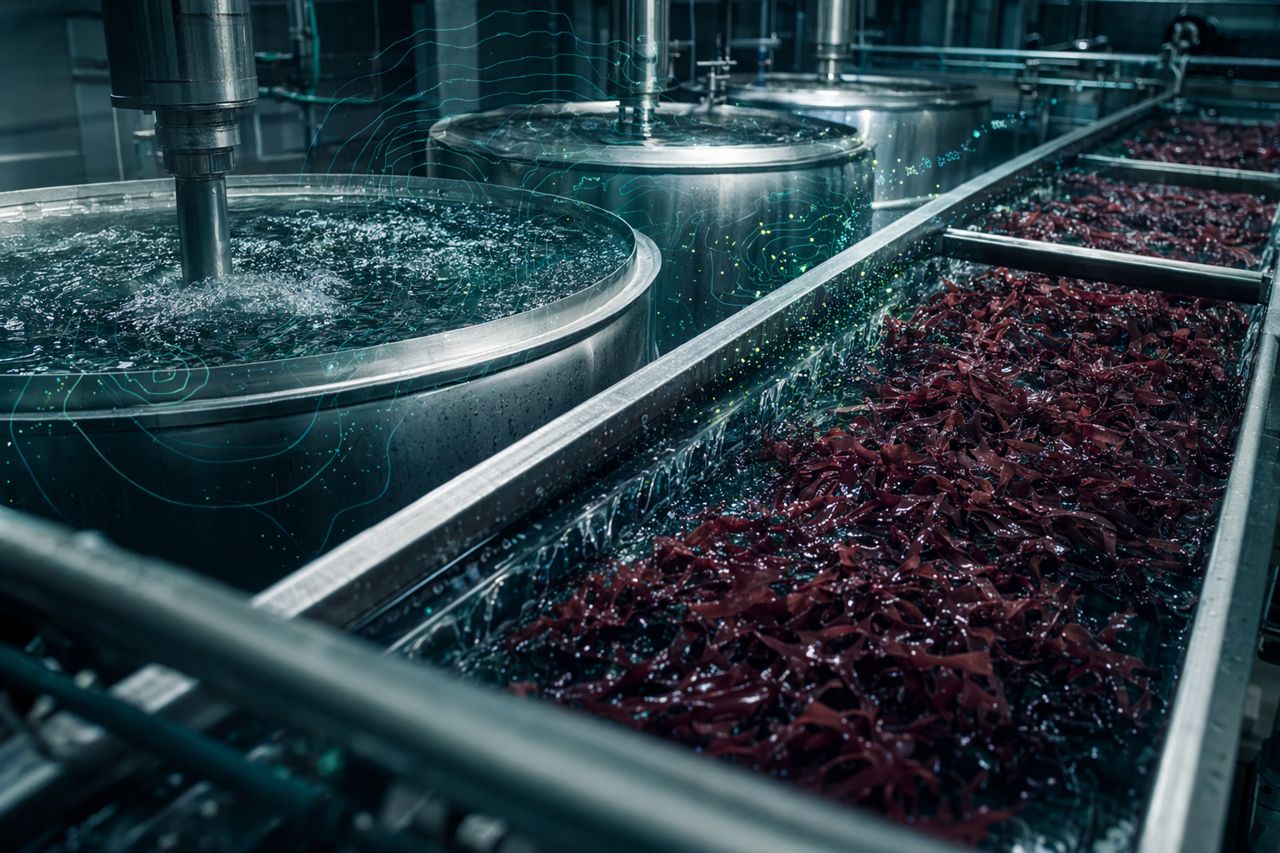
Enzyme-assisted pretreatment is not a replacement for your carrageenan conversion or extraction system. It is typically evaluated as a controlled upstream aid around raw seaweed preparation, washing, hydration, or pre-extraction conditioning.
The objective is to help loosen non-target structural barriers so extraction liquor can move more evenly through the seaweed mass. When correctly selected and controlled, this can support:
- More uniform seaweed softening before extraction
- Lower mechanical resistance in slurries and transfer lines
- Faster release of soluble fractions under existing plant conditions
- Cleaner separation behavior through screens, filters, or centrifuges
- Reduced load from stubborn fines and hydrated residues
- More predictable downstream gel, pressing, and drying behavior
Designed Around Carrageenan Yield, Not Enzyme Theory
Thalrix formulates for plant outcomes. In carrageenan production, that means protecting the value of the gelling fraction while reducing avoidable process drag from the rest of the biomass.
Our application work focuses on enzyme systems that can be matched to your seaweed type and operating sequence, including red seaweed inputs such as Kappaphycus, Eucheuma, Gigartina, and mixed seasonal streams. The aim is selective assistance—not uncontrolled breakdown.
Common Plant Targets
- Increase extractable yield from variable seaweed lots
- Improve batch-to-batch extraction consistency
- Reduce high-viscosity hold-ups during transfer and clarification
- Improve screen and filter throughput
- Support cleaner separation of insoluble residues
- Reduce rework tied to inconsistent liquor behavior
- Stabilize process response when raw material quality shifts
Controlled Hydrolysis Before the Critical Steps
Carrageenan plants already run with defined alkaline treatment, extraction temperature profiles, filtration logic, and gel recovery controls. Enzyme use must fit those realities.
Thalrix helps define a pretreatment window around your existing process rather than forcing a new process architecture. That includes reviewing:
- Seaweed species and seasonal variability
- Raw material cut size, washing, and hydration practice
- Existing tank sequence and residence-time flexibility
- Slurry movement, pumpability, and solids loading
- Alkali treatment interaction points
- Filtration bottlenecks and residue character
- Finished ingredient targets such as gel strength, viscosity range, color, ash, and clarity expectations
The result is a practical enzyme program with defined addition point, contact window, stop condition, and production checks.
What Thalrix Enzyme Support Can Improve
Throughput
Pretreatment can help extraction liquor penetrate biomass more uniformly, reducing dead zones and stubborn pockets of under-opened seaweed. Plants may see smoother tank discharge, steadier transfer, and less waiting around clogged screens or slow clarification.
Viscosity Control
Excessive or erratic viscosity can slow pumping, filtration, and concentration. Thalrix targets non-carrageenan contributors to process drag while keeping the carrageenan specification in focus.
Separation and Solids Handling
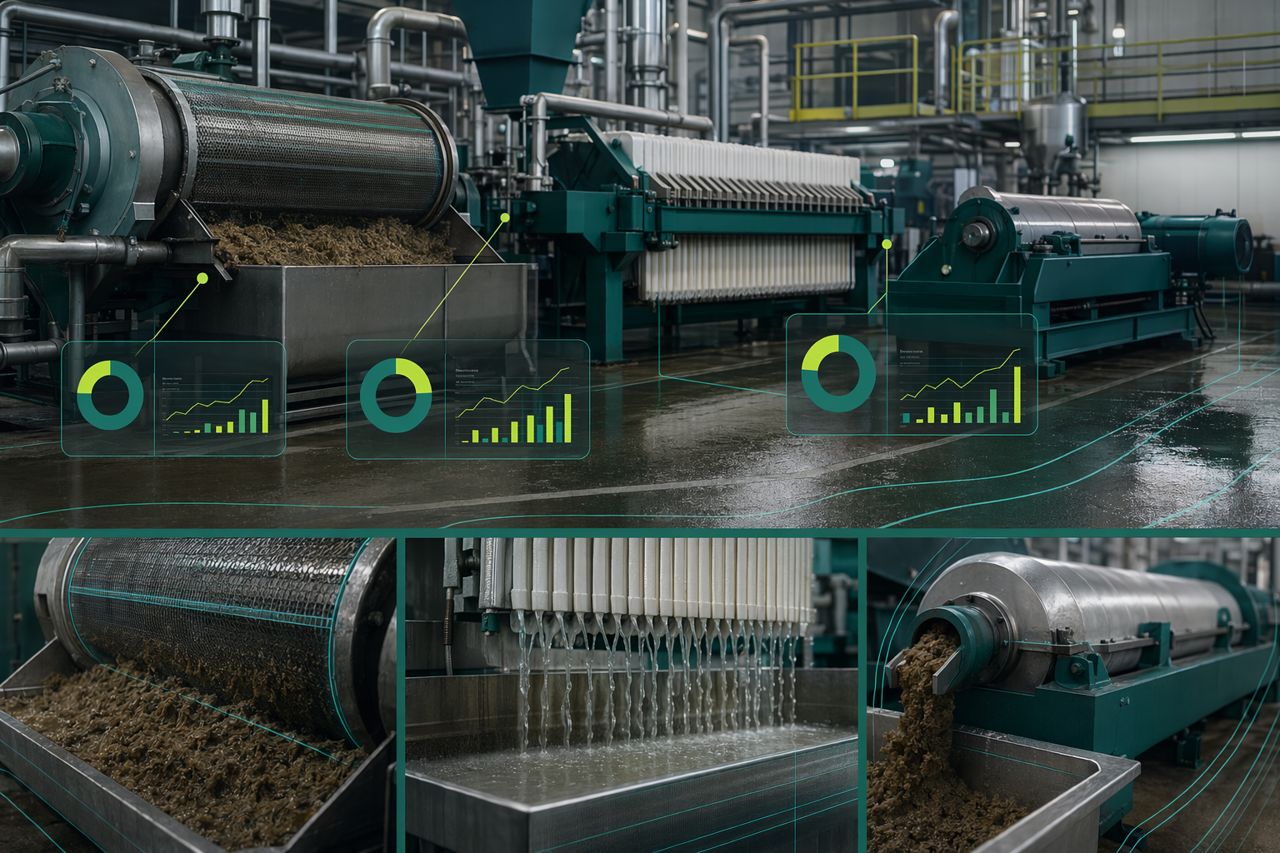
Cleaner structural opening can reduce ragged residues and improve how insoluble material behaves through screens, decanters, filters, and presses. Better solids behavior often means less manual intervention and more predictable cycle timing.
Consistent Ingredient Specifications
Raw seaweed is tidal, seasonal, and variable. Enzyme-assisted conditioning can help reduce the impact of that variability on extraction response, supporting more consistent finished-lot performance when integrated with your existing quality system.
No Interference with Core Carrageenan Controls
A carrageenan plant cannot afford an additive that destabilizes gel handling, drying, or final powder specification. Thalrix approaches enzyme selection with a clear rule: pretreatment must support the process, not compete with it.
That means we evaluate compatibility with your plant’s established controls, including:
- Alkali conversion strategy
- Extraction temperature and pH profile
- Clarification and filtration equipment
- Gel formation or alcohol recovery route
- Pressing and dewatering behavior
- Dryer load and powder finishing requirements
- Finished product release specifications
Application Development for Production Reality
Thalrix does not begin with a catalog guess. We begin with your bottleneck.
A typical evaluation may include:
- Process mapping — Identify where yield loss, viscosity spikes, filter restriction, or residue burden appears.
- Raw material review — Match enzyme logic to seaweed species, moisture condition, cut size, and seasonal variability.
- Pretreatment design — Define an addition point that fits tanks, holding times, and operator workflow.
- Plant-relevant screening — Compare extraction response, liquor behavior, residue profile, and downstream compatibility.
- Scale-up guidance — Translate the selected program into practical handling, dosing, mixing, and control steps.
- Commercial support — Align supply format, packaging, lead time, and documentation for repeat production.
Built for Extraction Managers, QA, and Procurement
Different teams look at the same enzyme program through different lenses. Thalrix supports each decision point.
For Extraction Managers
You need a pretreatment that behaves in real tanks, under real shift conditions, with seaweed that changes from lot to lot. We help define the window where enzyme action is useful and where it should stop.
For Quality Teams
You need consistency, traceability, and compatibility with finished ingredient specifications. Thalrix provides product documentation and application guidance to support controlled implementation.
For Procurement
You need reliable supply, commercially workable pack sizes, and clear communication before a plant trial. Thalrix supports quote preparation with enough technical detail to avoid under-specified buying decisions.
Request a Quote for Carrageenan Plant Enzyme Support
Tell us your seaweed type, current bottleneck, and where you believe pretreatment could fit. Thalrix will respond with a practical recommendation, supply format options, and quote guidance for your plant trial or production requirement.
Request a Quote
Use the on-site form below to request pricing and application support for enzyme-assisted carrageenan processing. Include your target outcome—yield, viscosity reduction, filtration improvement, solids handling, or specification consistency—so our team can route the request correctly.